|
How to Break the Profitable Growth Ceiling
How to Increase Momentum to Grow How to Strengthen Your Competitive Strategy The 4 Levers for a Great Leadership Team How to Get Your Team Executing Efficiently The 3 Ingredients to Get Out of the Weeds The Key Mindset to Grow and Thrive Why a DIY Approach Slows Growth 8 Types of External Guidance Why Doesn’t Leadership Training Stick Do You Have What It Takes? The 5 Criteria to Pick an Executive Team Coach  In our webinar earlier this year with Greg Crabtree, speaker, entrepreneur, financial expert and author of Simple Numbers 2.0, he shared what returns entrepreneurs should expect from their business: 5% net profit is survival, 10% is a good business, and 15% is a great business. These numbers are true for about 70% of businesses. He and his firm have since discovered a financial metric and standard that works for any company, regardless of industry, and that helps CEOs find surefire ways to improve their return on investment. In this Gravitas Impact Premium Coaches podcast, Crabtree shares this better metric, the additional levers to improve your return and how, contrary to a lot of financial advice, a business owner’s best investment decision is often not to diversify into other businesses, but rather to reinvest in their current business. Greg also shares how his background growing up on a chicken farm to becoming an accountant has led to how strongly he feels about helping entrepreneurs create security for their families. Subscribe to Gravitas Impact podcast: Android
How can you improve your company’s return on investment? To find out how to increase your return to grow more easily, quickly and profitability, AND enjoy the ride, try our complimentary Agile Growth Checklist. This self-service questionnaire takes 5 to 10 minutes to complete. You'll receive the checklist with your responses immediately. Within 24 hours, you'll receive a compiled report highlighting areas to improve. Complete section 5 to check your profit processes. Or complete all 7 sections to find out how your company is doing in each of the 7 areas needed to produce more rapid, profitable and sustainable growth. This report is complementary and involves no obligation.  #1 New York Times bestselling author Daniel Pink is globally celebrated for his rigorous research on work, behaviour, and motivation. He says autonomy, mastery and purpose have giant implications for the future of work, employee productivity, job satisfaction and overall wellbeing. Pink’s influential big-idea books (“When,” “To Sell is Human,” “Drive,” “A Whole New Mind”) have sold millions of copies globally and have won multiple awards. His latest book “The Power of Regret” was named a Best Book Of 2022 by NPR, Amazon, Apple Books, and the Financial Times. He’s been ranked in the Thinkers50 list for the 7th time, and his renowned TED talk has been watched over 40 million times. In this exclusive opportunity, ask questions LIVE and explore Dan’s wide-ranging ideas around the future of work, employee engagement, and overall life satisfaction. You will learn:
There’s a mismatch between what the science says and what business does.” – Dan Pink Join Dan Pink LIVE and ask him your questions directly- you won't want to miss this opportunity! Tue, 20th August 2024 8:00pm - 9:00pm MB / 7:00pm - 8:00pm SK  This session is included in a Growth Faculty Membership. Click the link below to sign up with $85 off (normally $423), Wellspring network discount. Prices quoted in USD What can you do to grow your mid-size company?
To find out what you and your leadership team could do to grow more easily, quickly and profitability, AND enjoy the ride, try our complimentary Agile Growth Checklist. This self-service questionnaire takes 5 to 10 minutes to complete. You'll receive the checklist with your responses immediately. Within 24 hours, you'll receive a compiled report highlighting areas to improve. Find out how your company is doing in each of the 7 areas needed to produce more rapid, profitable and sustainable growth. This report is complementary and involves no obligation.  Fuel, food, raw materials and intermediate products are getting more expensive. It's the best time to renegotiate your own terms. If you don't, you'll miss valuable opportunities to improve your business position - and let others take the lead.
In this article, you will learn why the human brain dislikes negotiating, why compromise is always the worst choice, and why empathetic negotiators can beat even the toughest negotiators. I will also share five concrete negotiation tips to help you find the best solution for both parties without compromising. These tips are based on the US bestseller "Never Split The Difference" by former FBI chief negotiator, entrepreneur, and negotiation coach Chris Voss. The human brain does not like to negotiate. If you're like me, the thought of an upcoming negotiation doesn't necessarily make you excited. If we think about it for a moment, that seems strange. The chance of getting what we want after a negotiation should be reason enough for us to go into such a situation with joy. Yet we feel inner resistance rather than excitement; this is the case even with the best salespeople. Brain research explains why this is so: every negotiation means hard work for our data center – and that contradicts the core goal of our brain to save energy. Negotiation situations are a balancing act between the joy of getting something (gain) and the pain of having to give something up (loss). Since gain and loss are processed in different regions of the brain, these regions must communicate intensively with each other during negotiations, requiring an enormous amount of working memory. Understandably, our brain would rather avoid such a neural feat of strength – thus forego the chance of winning a successful negotiation. The good news is, like any muscle, you can train the interaction between these two neural systems. So it's worth regularly putting yourself in negotiation situations and challenging your brain. Compromises are always the worst choice. Negotiations are successful when both sides emerge as winners. In other words, they aim for a classic win-win scenario. And that's a good thing. However, many people confuse such a win-win scenario with making compromises. That's wrong! "Negotiations are not about compromises, but about finding out the other party's red line," says former BKA negotiator and current negotiation coach Thorsten Hoffmann. It's not a case of "I'll give you a little, and you'll give me a little." That way, everyone gets something, but neither gets enough or what they actually want. Losses outweigh gains What makes things even more difficult is an exciting psychological phenomenon: loss aversion. When making compromises, everyone must give up something important to them. That is not easy because nobody likes to lose - even if they gain something else in the process. Think about it for a moment: You win a contract worth 50,000 dollars. Are you happy? Indeed – for a day or two. You lose a contract worth 50,000 dollars to a competitor a week later. Does that annoy you? And how – probably for the whole week. Our brains have double standards regarding gains and losses, and it has been proven that losses are more important than gains. This is why compromises such as "we meet in the middle" do not feel like success but leave a bitter aftertaste. Tactical empathy beats "tough dogs." Hollywood films have shaped our image of successful negotiators. They are the tough guys who stick to their position without compromise—the cunning opponents who spot the weakness of their negotiating partners and then exploit it cold-bloodedly. The atmosphere is tense; the camps harden, no one trusts the other, and no one gives in. Who stands firm? Who gives in first? Please put yourself in such a negotiation situation: To which person would you be more likely to make concessions?
In his bestseller Never Split The Difference, former FBI negotiator Chris Voss writes that people are more likely to make concessions and deviate from their own negotiating position if they feel understood, respected, and valued by their counterparts. He shares nine negotiation principles that have made him successful over the years. I want to introduce you to five of them. Five tips on how to negotiate successfully without compromising How can two parties reach an agreement if they don't make concessions and compromises to each other? Instead of trying to narrow your two conflicting ideas until you reach the lowest common denominator, work out a new, mutually acceptable agreement. Tip No. 1: Break down the barriers. Don't think in terms of fronts and avoid language that conveys "mine" versus "yours," "right" versus "wrong," "good" versus "bad." Presenting a solution as your idea versus your counterpart's, as right versus wrong, creates an antagonistic environment. Neither party can make concessions without sacrificing autonomy and integrity in such an environment. Instead of presenting your solution at the beginning of a negotiation, focus on building trust and gaining a more comprehensive understanding of your counterpart's point of view. Read the following four points to learn how to do this. Tip #2: Get the other person to say, "Yes, exactly!" You've probably experienced this before: While your counterpart is still arguing, you're already preparing your counter-argument in your head. What happens is that you stop really listening; this prevents mutual understanding from developing. If the person you are talking to does not feel heard and understood sufficiently, they will not be able to absorb what you have to say because their mind is still focused on themselves and their concerns. So listen carefully, ask questions, and paraphrase what the other person says until you really understand their core motivation. Only then can the other person say, "Yes, exactly," and be ready to listen to you from now on. Tip #3: Collect valuable information using the mirror technique. You want your counterpart to open up and give you more information about their real motives, their goal, where the no-gos are and where you can find hidden levers that can positively impact your negotiations. The mirror technique is easy and excellent for getting the other person to talk without interrogating them. It works like this:
What happens: This simple questioning technique allows you to dig deeper and gather helpful information without being intrusive. Your questions make the other person feel heard and valued. The fact that you use the exact words brings you closer together again and breaks down the barriers. Tip No. 4: "Label" your conversation partner's feelings. Decisions in negotiations always involve emotions. Discover your counterpart's emotions, address them, and give them a "label." For example, "It sounds to me as if…" or "That sounds to me as if…" With this technique, you can get your conversation partner to talk about these feelings and explain themselves further. Not only do you collect valuable information, but you also build trust and can, therefore, steer the negotiation in the right direction. Tip #5: Find the "black swans". Chris Voss calls the hidden information about our negotiating partners "black swans" that show us what they fear or desire most. They are usually beyond our assumptions, flash up as fragments of information during the talks and have the potential to turn a negotiation entirely in our favour. There are three types of such levers:
Consider:
If you cannot find levers in your preparation, use the mirror technique and labelling described above to gather more information about your negotiating partner. If you want to understand your counterpart's motives, listen carefully, ask questions, and paraphrase, you will sooner or later discover "black swans." Use them. Conclusion If you – like me – like to scroll straight to the end of an article, here are the essential findings summarized again:
If you're interested in reading more of Olaf articles please visit the website link above. (Please note that Olaf's site is in German but Google translate does an excellent job of instantly translating it to English.) How can a great business, growth & executive team coach help you grow a thriving company? To find out what areas a qualified executive team coach can help you improve in to grow more easily, quickly and profitability, AND enjoy the ride, try our complimentary Agile Growth Checklist. This self-service questionnaire takes 5 to 10 minutes to complete. You'll receive the checklist with your responses immediately. Within 24 hours, you'll receive a compiled report highlighting areas to improve. Find out how your company is doing in each of the 7 areas needed to produce more rapid, profitable and sustainable growth. This report is complementary and involves no obligation.  The 4 Disciplines of Execution, first published in 2004 by Stephen R. Covey, was revised and rereleased in 2012 by his son Sean Covey and colleagues Chris McChesney and Jim Huling. It covers a comprehensive system for executing change across a company.
The 4DX system is organized around four principles: 1) Focus on a small number of wildly important goals (WIGs). The more you try to do, the less you actually accomplish. So narrow your focus and make tough choices. 2) Act on lead measures contributing to those goals. The WIGs still need to be measured. But measuring the actions to achieve the WIGs will support accountability for what’s truly actionable. 3) Keep a compelling scorecard. It must be so simple that team members can track their own score and they determine instantly if they are winning or losing. 4) Create a weekly cadence of accountability to contribute to moving the score. Unless we consistently hold each other accountable, the goal naturally fizzles in the whirlwind of the day-to-day. 4DX is a detailed and highly specified system refined by the FranklinCovey organization over the last decade and a half. I’m usually wary of any book that claims its system will work well every time. However, I can say that 4DX does work for executive teams (alot of the time - more on that below). It’s very similar to the approach from Scaling Up and the 7 Attributes of Agile Growth that we use with leadership teams to help them execute their strategies. And that works. That said, how well these execution disciplines work depends on a number of things, such as:
While 4DX is a proven execution method, the results will be limited if these other more foundational aspects of the business aren’t also worked on. This is the benefit of a holistic, integrated approach to business growth like Scaling Up or the 7 Attributes of Agile Growth. They go beyond symptoms to address the root causes of top team challenges, stymied company growth and CEO frustration. Book: 352 pages, full audio - 8 hours 30 minutes, abridged audio – 3 hours 40 minutes. Summary on Soundview: 8 pages, 22 minute audio. On GetAbstract: 5 pages, 10 minute audio. How can you improve your team’s execution? To find out how to improve your execution to grow more easily, quickly and profitability, AND enjoy the ride, try our complimentary Agile Growth Checklist. This self-service questionnaire takes 5 to 10 minutes to complete. You'll receive the checklist with your responses immediately. Within 24 hours, you'll receive a compiled report highlighting areas to improve. Complete section 4 to check your execution practices. Or complete all 7 sections to find out how your company is doing in each of the 7 areas needed to produce more rapid, profitable and sustainable growth. This report is complementary and involves no obligation. Want to listen to the tip? Use the play button below. How can your team execute with less drama? To find out how to speed up execution to grow more easily, quickly and profitability, AND enjoy the ride, try our complimentary Agile Growth Checklist. This self-service questionnaire takes 5 to 10 minutes to complete. You'll receive the checklist with your responses immediately. Within 24 hours, you'll receive a compiled report highlighting areas to improve. Complete section 4 to check your execution processes. Or complete all 7 sections to find out how your company is doing in each of the 7 areas needed to produce more rapid, profitable and sustainable growth. This report is complementary and involves no obligation.  Get practical steps for coming up with powerful new ideas in this live Q&A with acclaimed author and expert in the science of choice, Sheena S. Iyengar. Drawing from recent advances in neuro and cognitive sciences, Iyengar offers an innovative evidence-backed method for generating big ideas that she and her team of researchers developed and refined over the last decade. Get the shortcut and attend this Q&A to discover the method that will guide creative thinking and help you produce revolutionary ideas. “SIMPLY BRILLIANT... AT LAST, A METHOD TO TAKE US TO THE FRONTIER OF NEW IDEAS, AND BEYOND.” - INDRA NOOYI, FORMER CEO AND CHAIR, PEPSICO You'll learn:
Attend this event and discover the evidence-backed tools from neuroscience to unlock your creativity and innovative thinking. Become a Growth Faculty Member to hear from Sheena on Tuesday 16 July, 6pm MB 5pm SK and discover how to get the results you need sooner. Click the link above to sign up with $160 off membership (normally $498), Wellspring discount. Prices quoted in USD How can you have more A-players in your company?
To find out how to have stronger talent and leaders to grow more easily, quickly and profitability, AND enjoy the ride, try our complimentary Agile Growth Checklist. This self-service questionnaire takes 5 to 10 minutes to complete. You'll receive the checklist with your responses immediately. Within 24 hours, you'll receive a compiled report highlighting areas to improve. Complete section 2 to check your talent processes. Or complete all 7 sections to find out how your company is doing in each of the 7 areas needed to produce more rapid, profitable and sustainable growth. This report is complementary and involves no obligation.  Growth companies cannot afford to wait three months to fill a key position. They need young talent, lots of it - and as quickly as possible, so that they can drive growth. These talents should have the right skills, be committed and, of course, fit into the company culture. Not an easy task.
Recruiting has changed a lot in recent years. In today's applicant market, top talent decides for themselves which company they would like to work for - not the other way around. You won't get very far with traditional recruiting methods such as job advertisements in the major job boards. The young generations Y and Z in particular need more to become aware of your company. Today I will show you six alternative recruiting strategies that will help you efficiently and precisely attract the talents for your company that will drive your growth company forward. Recruiting strategy #1: Recruit mobile-first! Millennials and Generation Z organize their entire lives via smartphone. Take advantage of this behavior and make your recruiting process mobile-friendly. This not only makes it easier for talented people to apply to you. Mobile-optimized websites and career pages are also rated better by search engines. This means that your career page will end up higher in Google search results and will receive more attention from potential applicants. A few tips that will help you get started with mobile recruiting:
Recruiting strategy #2: Retain talent before they enter the job market. Don't wait until young talent enters the job market and you have to compete with hundreds of other companies for their attention. Build trusting relationships with your future employees before they even start looking for a job. Student job portals such as jobvalley , connecticum or studentjob are good platforms for getting to know your employees of tomorrow early and without obligation. If you have found someone who convinces you, continue to cultivate the relationship even after the temporary job ends and make this talent an offer they can't refuse at the right time. Recruiting strategy #3: Use smart recruiting technologies. Many HR processes can be improved or automated using artificial intelligence. Self-learning algorithms like these offer great opportunities, especially in recruiting - for companies and applicants. AI applications have the potential to speed up and simplify your application process and also increase the chances of a "perfect match". Helpful AI applications in recruiting are:
Recruiting strategy #4: Offer video and voice applications. Since COVID-19, companies have become more video-savvy than ever. Video is also an excellent additional opportunity in recruiting to get to know applicants personally. According to a Bitkom survey, three out of four companies are already using digital job interviews via video call. Most companies have so far used classic video providers such as Microsoft Teams, Skype or Zoom. If you want to take your video and voice recruiting to the next level, you should look at video recruiting tools like Talentcube or voice-controlled chat application tools like Talk'n'Job . Recruiting strategy #5: Activate passive applicants. Instead of placing job advertisements and hoping for suitable talent, actively search for suitable candidates and contact them directly. 85 percent of all employed professionals worldwide would be willing to change jobs. Use this passive talent pool as a source for your recruiting. On LinkedIn, for example, you can create a recruiter profile and use it to search for candidates who match your exact requirements - without your name appearing in the search results. This way, you can send direct messages to suitable candidates who currently have a job but might be willing to change companies. Tips for contacting us:
Recruiting strategy #6: Search specifically in niche job boards. You don't always have to use the big job boards to find suitable applicants. Niche job boards are an excellent tool for segmenting the employee market. These platforms may not be as busy as big job boards, but they are great for hiring experts in specific fields. An added bonus: they are also more affordable.
Conclusion You have 5, 10 or even 50 vacancies to fill – preferably today rather than tomorrow. As a growth company, you can no longer make progress with conventional recruiting methods.
https://justgrow.eu/blog/ If you're interested in reading more of Olaf articles please visit the website link above. (Please note that Olaf's site is in German but Google translate does an excellent job of instantly translating it to English.) How can you have more A-players in your company? To find out how to have stronger talent and leaders to grow more easily, quickly and profitability, AND enjoy the ride, try our complimentary Agile Growth Checklist. This self-service questionnaire takes 5 to 10 minutes to complete. You'll receive the checklist with your responses immediately. Within 24 hours, you'll receive a compiled report highlighting areas to improve. Complete section 2 to check your talent processes. Or complete all 7 sections to find out how your company is doing in each of the 7 areas needed to produce more rapid, profitable and sustainable growth. This report is complementary and involves no obligation.  Little did I know I was embarking on a tricky mental adventure when I started reading The Goal, by the late Eli Goldratt. I was glad to find out the book was written as a business fable, which made it easier to understand than a technical style.
The Goal walks us through the journey of a manager who is told he has only three months to turn his plant around, all while his marriage is on the brink, in part, due to overwork. The manager figures out, with his team, what the ultimate goal of his plant is, how to make that goal relevant to their people and how to optimize the plant to achieve the goal. The story walks the reader through a mind shift from seeing a plant as a collection of parts to be individually optimized, towards seeing it as a whole system that requires careful coordination of the parts. Based on the same underlying principles as Lean manufacturing, the approach addresses the root causes of inefficiency by identifying and resolving bottle-necks between these different parts of the plant to improve the productivity of the whole. The manager also applies this approach to a company-wide scenario to determine the most important things to improve. This is the same way we have our clients prioritize changes and improvements in their business. The story also weaves in other useful best practices, such as tackling company-wide issues as a united management team and using outside expertise, lessons learned discussions, transparency and vulnerability. Book: 408 pages; 11 hour 45 minute audio book. How can you improve your efficiency? To find out how to improve your systems and processes to grow more easily, quickly and profitability, AND enjoy the ride, try our complimentary Agile Growth Checklist. This self-service questionnaire takes 5 to 10 minutes to complete. You'll receive the checklist with your responses immediately. Within 24 hours, you'll receive a compiled report highlighting areas to improve. Complete section 7 to check your company’s systems and processes. Or complete all 7 sections to find out how your company is doing in each of the 7 areas needed to produce more rapid, profitable and sustainable growth. This report is complementary and involves no obligation. Want to listen to the tip? Use the play button below. How can you have more A-players in your company? To find out how to have stronger talent and leaders to grow more easily, quickly and profitability, AND enjoy the ride, try our complimentary Agile Growth Checklist. This self-service questionnaire takes 5 to 10 minutes to complete. You'll receive the checklist with your responses immediately. Within 24 hours, you'll receive a compiled report highlighting areas to improve. Complete section 2 to check your talent processes. Or complete all 7 sections to find out how your company is doing in each of the 7 areas needed to produce more rapid, profitable and sustainable growth. This report is complementary and involves no obligation.  When it comes to reaching new customers, most companies miss the mark by overcomplicating their messaging, making it either too generic or overly technical. And it’s a costly mistake. In this Gravitas Impact Premium Coaches podcast, David Mann, keynote speaker, trainer, professional actor/director/storyteller and founder of the Simple Message, describes how to tell the right story, communicate value and engage your ideal customer’s emotions. Too often, businesses lose opportunities and profits by leading with their product or service, who they are or what’s unique about them. Focusing instead on simple messaging that speaks to solving the customer's problem, and executing that message across marketing channels that engage your ideal customers, leads to increased brand engagement, trust and loyalty. And above all it will differentiate your brand in a way that truly resonates. Subscribe to Gravitas Impact podcast: Android
How can you resonate with your ideal customer? To find out how to connect with your best type of customer to grow more easily, quickly and profitability, AND enjoy the ride, try our complimentary Agile Growth Checklist. This self-service questionnaire takes 5 to 10 minutes to complete. You'll receive the checklist with your responses immediately. Within 24 hours, you'll receive a compiled report highlighting areas to improve. Complete section 6 to check your company’s customer processes. Or complete all 7 sections to find out how your company is doing in each of the 7 areas needed to produce more rapid, profitable and sustainable growth. This report is complementary and involves no obligation. 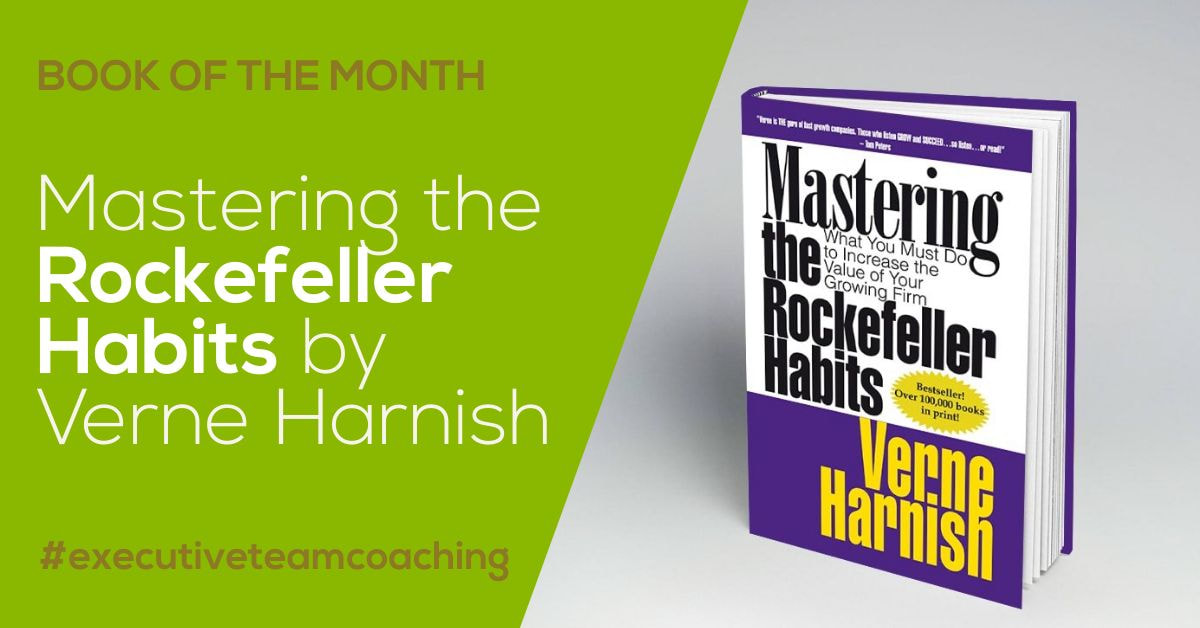 As more business owners, CEOs and presidents become aware of leadership operating systems like Scaling Up and the 7 Attributes of Agile Growth, it’s important to remember that these frameworks stand on the shoulders of one of the first frameworks developed for mid-sized companies: Mastering the Rockefeller Habits, by Verne Harnish.
Mastering the Rockefeller Habits, like the methodologies that followed in its footsteps, describes a compilation of several tools developed and proven by other great thought leaders, and packaged for owners, CEOs and presidents of mid-sized companies. Released in 2001, the book, for the first time, brought together concepts like getting the right people doing the right things, creating a one page strategic plan, setting quarterly metrics and priorities, and having an effective meeting rhythm. Verne was inspired by the biography and executive team routines of the renowned John D. Rockefeller, who led Standard Oil for 19 years, as well as the practices of many other business leaders, like Jack Welch of GE, Tom Meredith of Dell, Tom Siebel of Siebel Systems and Bill Gates, founder of Microsoft. The best practices covered in Mastering the Rockefeller Habits are now corner-stones of the more recent Scaling Up system (also spear-headed by Verne Harnish) and the more holistic 7 Attributes of Agile Growth system, summarized in books by the same names. Yet Mastering the Rockefeller Habits is still worth the read. Beyond seeing some of these best practices from another perspective, there are a couple of tools that haven’t been carried forward into later systems: how to de-hassle your company (Chapter 7) and how to make banks compete to loan you money (Chapter 10). Scaling Up and the 7 Attributes of Agile Growth focus instead on finding cash from within the company (EOS doesn’t directly address cashflow and profitability). Yet, financing is still often needed. And Mastering the Rockefeller Habits provides some great advice on this. Book: 150 pages, 4 hour audio. GetAbstract Summary: 5 pages, 10 minute audio. How can you strengthen your team’s habits? To find out how to create more discipline on your executive team to grow more easily, quickly and profitability, AND enjoy the ride, try our complimentary Agile Growth Checklist. This self-service questionnaire takes 5 to 10 minutes to complete. You'll receive the checklist with your responses immediately. Within 24 hours, you'll receive a compiled report highlighting areas to improve. Find out how your company is doing in each of the 7 areas needed to produce more rapid, profitable and sustainable growth. This report is complementary and involves no obligation.  The best strategies and market opportunities in the world mean nothing if your people don’t step up, take responsibility and act accountably. And yet, accountability remains a top issue for business leaders around the world. In this 90 minute live virtual masterclass, author, strategic advisor and business and leadership growth coach Mark Green, will guide you through implementing the behaviors, structure, rules, tools and processes required to close the costly and frustrating accountability gap. “If you don't get accountability right, you won't get much else right either.” - Roger Conners Mark will lead you to discover:
Become a Growth Faculty Member to hear from Mark on Tuesday 14 May, 6pm MB 5pm SK and discover how to get the results you need sooner. Special discounted Growth Faculty Membership for Wellspring clients and network Prices quoted in USD What can you do to grow your mid-size company?
To find out what you and your leadership team could do to grow more easily, quickly and profitability, AND enjoy the ride, try our complimentary Agile Growth Checklist. This self-service questionnaire takes 5 to 10 minutes to complete. You'll receive the checklist with your responses immediately. Within 24 hours, you'll receive a compiled report highlighting areas to improve. Find out how your company is doing in each of the 7 areas needed to produce more rapid, profitable and sustainable growth. This report is complementary and involves no obligation.  Many companies today first test a minimal version of their product or service (MVP) to see whether they could be successful on the market with it. This makes sense when you consider that nine out of ten innovations are doomed to failure.
But even investing in an MVP is risky. Here too, companies first make advance payments and invest development time and budget in an idea before testing whether anyone would actually spend money on their solution. A risk that can be avoided. How, you ask? There's a way companies can get customers before they even have to invest time and money in an MVP. The concept I would like to introduce to you today is called pretotyping. A step-by-step guide to pretotyping Pretotyping Step 1: Define your offer. Even the best sales are of no use if you have not clearly positioned your product or service. So first of all, ask yourself:
Pretotyping Step 2: Create a landing page. Your product doesn't even exist yet. But that doesn't matter. Because you know exactly what problem you can solve with it and who the people are who have this problem. Now put these insights into words and create a landing page for your future offer. Your landing page needs these elements:
Pretotyping Step 3: Give your visitors something of value. Free additional offers that provide significant added value for your users are called lead magnets. You are giving something valuable to your users who are interested in your offer but are not yet ready to respond directly to your call to action. In return, these users give you their email addresses. You will use this in later nurturing (step 7) to further maintain them and provide them with helpful information until they are ready to buy. Case studies, white papers, checklists, templates, calculators, webinars, videos and much more are suitable as lead magnets Pretotyping Step 4: Find Potential Leads. In step 1 you clearly defined your target group. Now look for real people who fall into this target group. Social media platforms such as LinkedIn and Xing are suitable for this, where you can search for free by industry, position and title of your target group. The LinkedIn tool Sales Navigator (paid) offers an even more effective way to identify leads. This allows you to define your search precisely, for example by industry, zip code, number of employees or seniority. Start broad and get narrower in your search until you end up with a list of 3,000 to 4,000 leads. Pretotyping Step 5: Write to your leads. Now get in touch with your target group. Send contact requests to your leads and write short, friendly direct messages in which you pitch your free lead magnet. Target the leads with whom you have the most common contacts first. Save the leads without common contacts for last. The more people accept your request, the higher the likelihood that new mutual contacts will arise with those leads with whom you initially had no connection. A clever snowball model. Also helpful: Ask good contacts for an intro to a potential customer. And: Follow up again in a friendly manner after seven days if leads have not responded to your request. Such direct messages often simply get lost in the inbox. Pretotyping Step 6: Send your lead magnet. I know from my own campaigns that around 30% to 50% of the people you write to will accept your contact request. Half of them will show interest in your lead magnet. Now send your lead magnet to these leads by email. You can do this manually or automatically, for example with the Brevo emailing tool . Pretotyping Step 7: Nurture your leads in a nurturing campaign. Over the next few weeks, you will nurture your leads with a nurturing campaign. To do this, send them a short, valuable tip every week that will help them solve their problem. In this way, you establish yourself as an expert in your field and remain present not only in the inbox, but above all in the minds of your leads. Pretotyping Step 8: Determine willingness to buy using lead scoring. When can you finally make your offer to your leads? How do you know when a lead is ready to buy? You can determine the willingness of your leads to buy using so-called lead scoring. In a points system, you determine which interactions of your leads with you and your content are “worth” how many points. I myself work according to the following points system:
Pretotyping Step 9: Make your offer. How you want to make your offer is a matter of taste. Some people like to pick up the phone and simply call your leads. If that's too direct for you, take a close look in your CRM system at what interactions your lead had with your content, what content they spent a particularly long time looking at, and what links they clicked on. Then formulate a personal email that is tailored precisely to these interests and interactions and make your offer. The offer is your email’s call to action. Another way to make an offer to your leads is with a sales campaign. To do this, write five sales emails in which you tell your offer as a story in five acts - each one with a clear focus: Sales email 1: What is the problem and how do you solve it for your customers? Sales Email 2: Have a testimonial tell you how you solved their problem. Sales Email 3: Anticipate and refute the biggest objection that could stop your leads from making a purchase. Sales email 4: Surprise your leads with a paradigm shift. Describe a common prejudice about your offer and refute it. An example: “A personal trainer is a luxury that only rich people can afford.” A paradigm shift could be: “It is not a luxury to invest in your own health. If you can’t manage to change your exercise behavior on your own, get support from an expert.” Sales email 5: Briefly summarize the key messages from the previous emails and end with a specific call to action, e.g. arrange a non-binding consultation, try it out for free for 1 month, etc. Conclusion Pretotyping is a sure-fire way to attract new customers even before you've invested time and money into developing an MVP. The nine steps summarized again:
This lead list is your most valuable asset. Because you can scale this list and identify new leads from it. For example with lookalike audiences. If you have a size of 1,000 people or more, you can create so-called lookalike audiences on Facebook and LinkedIn from your lead list. This helps you identify new audiences that have similar characteristics to your lead list and that can be up to 15 times larger than your original list. You can now target this target group again and increase your email list tenfold. https://justgrow.eu/blog/ If you're interested in reading more of Olaf articles please visit the website link above. (Please note that Olaf's site is in German but Google translate does an excellent job of instantly translating it to English.) How can you elevate your people to the next level? To find out what you can improve in your leadership team to grow more easily, quickly and profitability, try our complimentary Agile Growth Checklist*. This self-service questionnaire takes 5 to 10 minutes to complete. You'll receive the checklist with your responses immediately. Within 24 hours, you'll receive a compiled report highlighting areas to improve. This report is complementary and involves no obligation. Complete section 1 and 4 to check your leadership team* and accountability processes*. Or complete all 7 sections to find out how your company is doing in each of the 7 areas needed to produce more rapid, profitable and sustainable growth. Want to listen to the tip? Use the play button below. What systems can you improve to grow a thriving company? To find out what systems you and can improve to grow more easily, quickly and profitability, AND enjoy the ride, try our complimentary Agile Growth Checklist. This self-service questionnaire takes 5 to 10 minutes to complete. You'll receive the checklist with your responses immediately. Within 24 hours, you'll receive a compiled report highlighting areas to improve. Find out how your company is doing in each of the 7 areas needed to produce more rapid, profitable and sustainable growth. This report is complementary and involves no obligation.  45-MINUTE Q&A WITH THE AUTHORS OF MOVE FAST AND FIX THINGS Want to know how to lead change – with a clear plan for how to spend your Monday through to Friday? In this free interview, bestselling authors, and cohosts of the TED podcast Fixable, Frances Frei and Anne Morriss will walk you through their playbook for leading change. Over 45 minutes they’ll share their radical approach set out in their book “Move Fast and Fix Things - The Trusted Leader’s Guide to Solving Hard Problems.” Frances Frei is a Harvard Business professor who has been central to Uber’s cultural transformation. She and Anne are two of the top leadership coaches in the world and their work with fast-moving companies Uber, Riot Games, and ServiceNow underpin their approach to leading change. "Move Fast & Fix Things invites us into a conversation all leaders should be having: how to create the conditions where people can truly, sustainably thrive." - Becky Schmitt, Executive Vice President and Chief People Officer, PepsiCo What you get: 45-minute live interview with Frances Frei and Anne Morriss Growth Faculty Premium Members also access: A hardcopy of: “Move Fast and Fix Things” BOOK YOUR SPOT FOR FREE TODAY! Wednesday, April 30, 2024 - 6pm in MB, 5pm in SK OUR NETWORK DISCOUNT PRICE: FREE What can you do to grow your mid-size company?
To find out what you and your leadership team could do to grow more easily, quickly and profitability, AND enjoy the ride, try our complimentary Agile Growth Checklist. This self-service questionnaire takes 5 to 10 minutes to complete. You'll receive the checklist with your responses immediately. Within 24 hours, you'll receive a compiled report highlighting areas to improve. Find out how your company is doing in each of the 7 areas needed to produce more rapid, profitable and sustainable growth. This report is complementary and involves no obligation.  Systemization around branding and operations is a big missing link in many organizations. The disconnect occurs when Marketing sets an expectation and there are no standard operating procedures systematized throughout the customer's journey, aligning the experience with the expectation. In this Gravitas Impact Premium Coaches webinar and podcast, Brandon Dempsey, Author of Shut Up and Go, and Co-founder of St. Louis marketing company, goBRANDgo!, describes how the systemization of a brand creates cohesion and connects customers with the company. The Systems Attribute within the 7 Attributes of Agile Growth® framework is a key differentiator for Gravitas Impact Premium Coaches. Many mid-market companies don’t focus on Systems, and yet Systems are critical to scaling efficiently and profitably. Subscribe to Gravitas Impact podcast: Android How can you build systems to deliver on your brand?
To find out how to strengthen your systems to grow more easily, quickly and profitability, AND enjoy the ride, try our complimentary Agile Growth Checklist. This self-service questionnaire takes 5 to 10 minutes to complete. You'll receive the checklist with your responses immediately. Within 24 hours, you'll receive a compiled report highlighting areas to improve. Complete section 7 to check your company’s talent processes. Or complete all 7 sections to find out how your company is doing in each of the 7 areas needed to produce more rapid, profitable and sustainable growth. This report is complementary and involves no obligation. 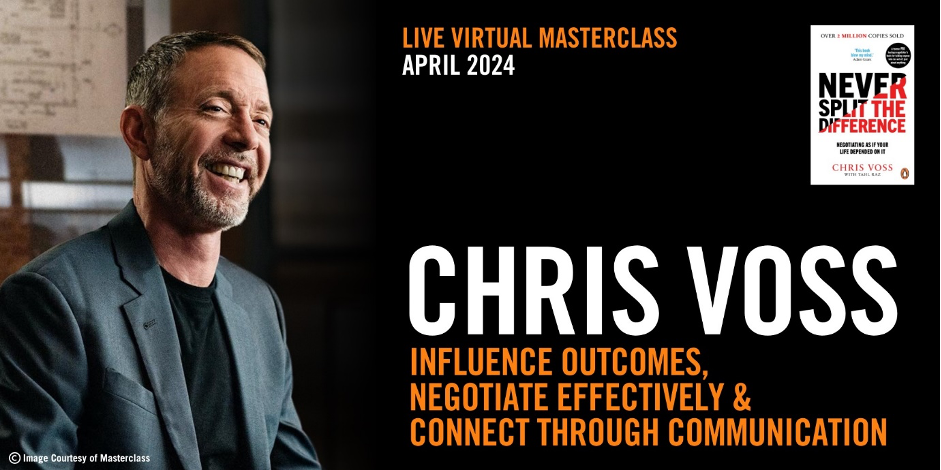 “Negotiation is nothing more than communication with results.” In 2024, leaders face ongoing economic uncertainty, difficult conversations around flexible working and budget pressures, so the ability to influence and de-escalate tense situations is more critical than ever. As a former FBI hostage negotiator and author of Never Split the Difference, Chris Voss brings a tested toolkit to navigate high-stakes negotiations. In this 90 minute live virtual masterclass, you will learn how to:
Buy a virtual ticket today to hear from Chris and emerge from his masterclass – Influence Outcomes, Negotiate Effectively & Connect Through Communication – with the confidence to facilitate negotiations, drive win-win outcomes, and unite your team around common goals, even when opinions differ. BOOK YOUR SPOT TODAY! Wednesday, April 9, 2024 - 6pm in MB, 5pm in SK OUR NETWORK DISCOUNT PRICE: $130* *Prices quoted in USD. What can you do to grow your mid-size company?
To find out what you and your leadership team could do to grow more easily, quickly and profitability, AND enjoy the ride, try our complimentary Agile Growth Checklist. This self-service questionnaire takes 5 to 10 minutes to complete. You'll receive the checklist with your responses immediately. Within 24 hours, you'll receive a compiled report highlighting areas to improve. Find out how your company is doing in each of the 7 areas needed to produce more rapid, profitable and sustainable growth. This report is complementary and involves no obligation. 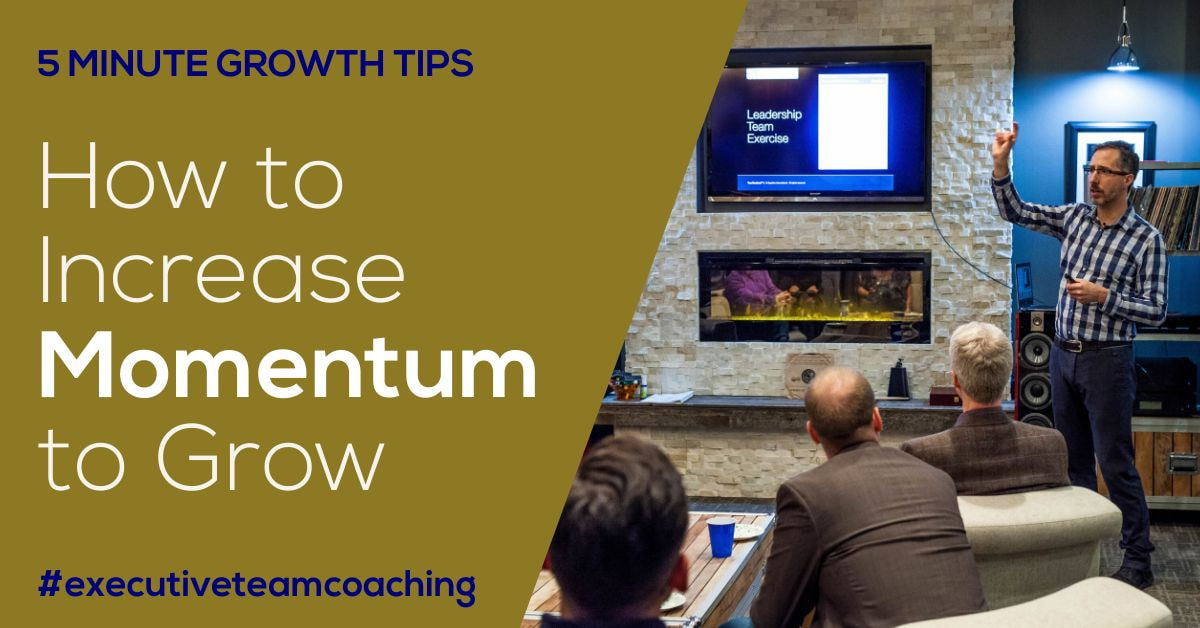 In the previous 5 Minute Growth Tip article, I shared how companies need to implement structures, processes and systems in order to grow. Without this, they either won’t grow beyond the limits of their current structures, or they will grow inefficiently and increasingly unprofitable.
But as an owner or CEO tries to grow their company to 50, 100 or 200 employees, they may feel like the company is no longer making real progress with those kinds of improvements. Any changes they want to make in their company don’t seem to get done, or don’t get done right. So, how can CEOs increase their momentum? We know that, as a company grows, the CEO increasingly has to get things done through their top team. I covered this also in this previous article. The members of their top team are the ones who need to lead improvement projects within each of their departments and between and across departments. The two keys to making this happen are 1) efficient leadership team buyin, and 2) accountability for execution. Why progress slows with growth When a company is small, less than 10 or 15 employees, it’s more straightforward to get improvement projects done. Often, as CEOs, we just do these projects ourselves. As we begin to delegate these improvement projects, we simply ask a supervisor or front-line employee to get them done. If they are a strong employee, they will usually make it happen. When we have 25, 50 or 100 employees, it gets harder. The reason is what’s called “the power differential”: the difference between the influence of the CEO and the influence of others. In a smaller company, the owner is a strong voice that is heard more easily among the small group of employees. There are often no other voices that are similarly strong (unless of course there is one or more partners involved). It’s also easy to see when someone in a small group is not following through on a project. So each employee has a strong motivation to follow through on the owner’s direction. In a smaller company, there is a large power differential. As the company gets larger, the power differential decreases. As some departments get larger (eg. a production department), the leaders of those departments gain influence. They have now become critical people for the productivity and profitability of the company. The owner no longer has that same strong singular voice. One or more other leaders have strong voices as well. They tend to have more influence about decisions made for the company, and certainly their own department. As well, the owner becomes more detached from the front-line and may feel less confident about what is the right thing to do. The other influential leaders now often have a better perspective on what needs to be done in the operations. This also increases their influence. The owner may therefore feel less influence to be able to simply ask others to take on and carry out improvement projects they dream up. They know they need these high-influence leaders to make things happen. And they may recognize that they lose their leaders' commitment and initiative when they just tell them what to do. The result is that getting leaders to make changes and improvements in and across a mid-size company becomes more challenging than getting front-line employees and supervisors to do so in a smaller company. The trick is in the two keys: 1) efficient leadership team buy-in, and 2) team-based accountability. Efficient Leadership Team Buyin Rather than a CEO figuring out on their own what needs improving and changing for the company, and simply delegating those projects to others, they need to shift to making decisions for the company in collaboration with the members of their top team. This will enable them and their top team members to make company decisions that they’re all committed to. In short, as the saying goes, “people support what they help to create”. This doesn’t mean the CEO doesn’t get the final say. It’s how they get to a final decision that needs to be adjusted. Patrick Lencioni, in his best-selling book, The Five Dysfunctions of a team, called this approach “disagree and commit”. The top team discusses the problem or opportunity and gets all the information out on the table for consideration. Options are discussed and weighed. All members of the top team have the opportunity to share their perspectives and concerns. If an agreement is easily made, then great. If not, the CEO makes the final decision with everyone knowing their perspective has been heard and considered, and agreeing that now is the time to commit to the final decision. This approach allows for effective leadership team participation, while keeping it efficient. This can be a game-changer for CEOs who have already shifted to involving their top team in decision-making, but have gone too far. Their decision-making may have slowed to a crawl, or decisions simply don’t get made, because they and their leadership team members don’t always agree on what’s best. And the CEO isn’t willing to make a final decision for fear that their leaders won’t buy in at all. “Disagree and commit” solves this problem. Accountability for Execution Once there is top team buyin to a decision, how do we ensure accountability for its execution? Buyin is certainly important for accountability. But it’s not enough. Accountability ensures that leaders assigned with taking on certain improvement projects follow through as best as humanly possible. Accountability also means being open and transparent when a project or special effort doesn’t go as planned, so all possible action can be taken to get it back on track. Accountability, also, is more difficult as a company grows. And it’s also due to the changing power differentials. Simply following up one-on-one with individual leaders no longer works as well. Leaders of larger departments have more influence, and their performance is more hidden in a larger company. So there is less pressure to follow through. The solution is again a team approach. Mark Green, a colleague of mine in Virginia, and a peer member of Gravitas Impact Premium Coaches, captured the key ingredients for accountability in his recent monograph titled “Creating a Culture of Accountability”. There are three ingredients for accountability:
Self-accountability is where the CEO, as the leader of the team, leads by example by acting accountably themselves, ensuring they have the right people in the right seats on their leadership team, and raising their expectations of their leaders. Role accountability is about ensuring each leader is clear about their own and each others’ accountabilities. This includes defining the specific results expected for each role and the metrics that make those expectations clear. Note that it’s just as important for leaders to be clear on each others’ roles as their own. This ensures only one person is accountable for each function and everyone is clear on what to expect from others. Process accountability includes communicating about decisions they’ve made in a way that maintains leaders’ natural motivation to execute. This includes believing in their ability to succeed, reminding them why it matters and paying attention to their progress. Process accountability also involves: - ensuring planning happens before action, and on a consistent basis, - having a rhythm of effective and efficient meetings that ensures regular follow-up on progress and results, - and regular one-on-one coaching between the CEO and each leadership team member to develop and support performance. From leading individuals to leading the top team Efficient leadership team buy-in and team-based accountability for execution are the two keys for CEOs to enable continual improvement to grow their mid-size companies. And we can see a common thread for the CEO: shifting from directing individuals to leading and building the top team. This shift can be challenging for CEOs who have become comfortable with a directive style. Yet shifting to leading the top team is critical to getting their leaders bought in, executing, and making more progress. But is it really progress if you’re not going in the right direction? And how do you know if you are? More on that in my next 5 Minute Growth Tip article. How can you increase your momentum? To find out how to make more progress to grow more easily, quickly and profitability, AND enjoy the ride, try our complimentary Agile Growth Checklist. This self-service questionnaire takes 5 to 10 minutes to complete. You'll receive the checklist with your responses immediately. Within 24 hours, you'll receive a compiled report highlighting areas to improve. Complete sections 1 and 4 to check your company’s leadership team and execution processes. Or complete all 7 sections to find out how your company is doing in each of the 7 areas needed to produce more rapid, profitable and sustainable growth. This report is complementary and involves no obligation. 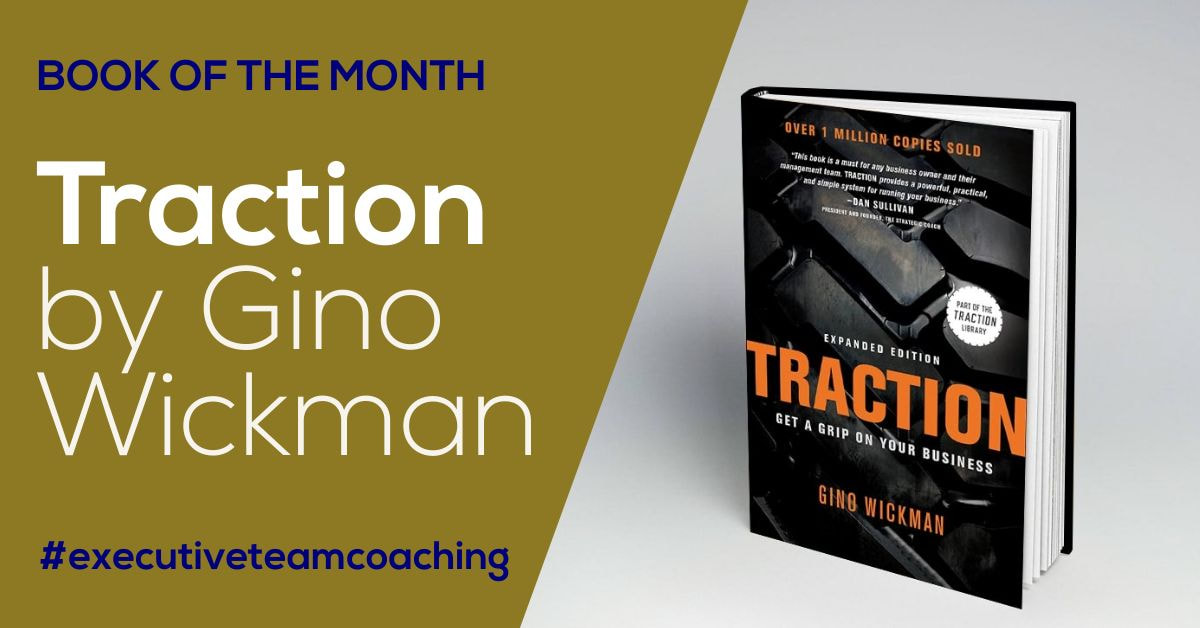 As you work with your leadership team on building your business and organization to grow more easily, profitably and sustainably, it helps to have a methodology or set of tools to use, rather than figuring out on your own what best practices to implement.
Over the 17 years I’ve been working with CEOs and their leadership teams, I’ve learned to implement a half dozen methodologies, including the Scaling Up method and the 7 Attributes of Growth tools. Traction, a book written by Gino Wickman, summarizes another such methodology: EOS (the Entrepreneurial Operating System). Like Scaling Up and the 7 Attributes of Growth, it goes beyond setting mere mission, vision, values and priorities to also address people and execution. This isn’t coincidental. Gino was a coach in our network several years ago and used our tools. He then founded his own network of coaches and wrote Traction to capture his approach. Scaling Up and the 7 Attributes of Growth were written since that time and included many best practices that Gino did not, like the daily huddle and cash flow optimization tools. That said, Gino includes a couple of unique tools I have found useful, for example, the People Analyser and the Visionary-Integrator model, which I sometimes implement with the CEOs and leadership teams I work with. The People Analyser is a simple form to quickly evaluate each employee against the company’s core values. The companies I work with use this as input to our talent assessment where leadership team members assess each of their direct reports and then hold each other accountable to coach them up or out. The Visionary-Integrator model is a way for dynamic, creative owners and CEOs to pick and effectively work with a co-CEO who is stronger in the disciplined, structured and organizational aspects of running the company that are needed to enable predictable, profitable and sustainable growth. It enables the owners to do what they do best while also having someone with the other critical skills needed to truly move the business forward. Gino packages the best practices he selected into the six areas of EOS: Vision (including high level strategy and execution planning), People, Data (metrics), Issues, Process and Traction (meeting rhythms). EOS and Traction is a solid, simple approach with easy-to-use tools. In my experience, it works best for smaller companies up to about 25 employees. Beyond that, there tend to be certain challenges that come up that EOS doesn’t address, for example: leadership team cohesiveness, team member productivity, effective hiring, leadership mindset, cascading metrics, planning priorities, clear competitive strategy and financial optimization, planning and forecasting. By contrast, Scaling Up and the 7 Attributes of Agile Growth include most of the best practices found in EOS, and also address these additional challenges as they come up. The 7 Attributes of Agile Growth then go beyond to tackle some of the more nuanced challenges of growth like customer experience, systems and change and leaders’ health. See last month’s Book of the Month for more information. If you’re looking for a simplified methodology with user-friendly terminology and a detailed how-to playbook to get started implementing a set of best practices, Traction may do the trick. Book: 251 pgs, 6h56m audio. How can you get more traction? To find out how to make more progress to grow more easily, quickly and profitability, AND enjoy the ride, try our complimentary Agile Growth Checklist. This self-service questionnaire takes 5 to 10 minutes to complete. You'll receive the checklist with your responses immediately. Within 24 hours, you'll receive a compiled report highlighting areas to improve. Find out how your company is doing in each of the 7 areas needed to produce more rapid, profitable and sustainable growth. This report is complementary and involves no obligation.  You work 80 hours a week for your company. However, you still don't get around to taking care of the big, important issues such as sales development, process optimization or talent management? In short, your efficiency is very low? Welcome to the club!
Many successful entrepreneurs feel the same way as you. Every day you are overwhelmed by 100 pressing issues that demand your immediate attention. And yet another day when you couldn't take care of your actual, important tasks. Urgent does not mean important You guessed it: the urgent issues are not always the most important. And the big, important issues are rarely urgent - and that is precisely why they are so often postponed. This is a risky maneuver: 1. You fail to continually develop your company and set the course for future growth. 2. You risk burning out too quickly due to the persistently high workload. Every second manager worldwide regularly feels exhausted at the end of their working day - a sure warning sign of burnout. That's just how it is as an entrepreneur, don't you think? But it doesn't have to. I would like to show you seven ways to increase your personal effectiveness. This creates time to tackle the major levers in your company. And you suddenly have time for your family and private life again. Finally time for your big topics Increasing efficiency Way No. 1: Say no more often! Everyone wants something from you, and everything seems urgent. Don't let others dictate your priorities. Decide for yourself which tasks you want to tackle - and which you don't. For each task, ask yourself: Does the task really advance your company? Are you really the one person who can do this job best, or would you be better off somewhere else? What bad thing would happen if you don't complete this task? Don't fill your day with busy tasks. These always seem urgent, but they don't get you anywhere. It's better to say no again and use the freed up time to tackle the big levers in your company. Increase efficiency Way No. 2: Do unpleasant things according to the “first in – first out” principle. Are you one of those people who initially cleaned the apartment or went to sports during your studies in order to avoid unpleasant tasks (study for an exam, start your master's thesis)? Even as an entrepreneur, there are always tasks that are at the bottom of your popularity scale. Just the thought of it makes you uncomfortable. The same mechanism is triggered here as it was during our studies: our brain tries by all means to avoid unpleasant feelings. Therefore, it will reliably provide you with all sorts of rational justifications why you cannot do this unpleasant task now, but instead a completely urgent other task. The result: you push unpleasant topics to the back of your mind. Important tasks remain unfinished. And because you know that this avoidance behavior is wrong, the hole in the pit of your stomach grows deeper every time you think about the task. A real vicious circle. What has helped me to tackle unpleasant tasks consistently is an uncompromising “first in – first out” principle. I work through my tasks in order from bottom to top - either as emails in my inbox or as a to-do list. The order of these tasks is not prioritized and is therefore negotiable. This is how I managed to complete unpleasant tasks one after the other, like a machine. Pro tip: If you have experience with mindfulness meditation , direct your focus specifically on the negative feelings that an unpleasant task triggers in you. If you're like me, you may notice that these feelings are nothing more than physical symptoms (fast pulse, queasy stomach, heat, tingling fingers, etc.). And these often become weaker just by specifically feeling them. Increase efficiency Way No. 3: Only work through your inbox once a day. Are you proud of how quickly and reliably you answer emails? Many people confuse this speed of response with professionalism, reliability and quality of their work. But with every email you answer in between, you allow yourself to be distracted from your actual tasks and impose other priorities. Here's how to spend as little time as possible in your inbox: Set a block the day you work on your inbox. Inquiries that you can answer within two minutes can be dealt with immediately. Leave the remaining emails in your inbox and deal with them chronologically when you get to them. (You should communicate this procedure to your team beforehand.) Increase efficiency Way No. 4: Set yourself fixed blocks for important tasks. You cannot work on any topic that lasts longer than two hours according to the “first in – first out” principle. Because you hardly have time blocks lasting several hours, and these tasks would otherwise clog up your system. Set aside fixed 30-minute blocks each day for longer tasks like this. I like to set blocks like this in the early morning when I have a lot of energy and no meeting requests can get in the way. This way you work slowly but steadily on larger tasks. The constant progress you make will motivate you day after day. Increase efficiency Way No. 5: Only take on as much as you can do in a week. Nothing is more demotivating than long to-do lists. And nothing seems more unprofessional than making team members wait weeks for your response. Therefore, only take on as many tasks as you can safely complete in a week. Plan 80% of your time and leave 20% free for unforeseeable things. This 20% will be filled quickly. For example, I keep Friday free to work through my to-do list, so that the oldest item on my list comes from Monday at most. Increase efficiency Way No. 6: Keep your team up to date. Nothing makes people more uneasy than the feeling of not being up to date. Therefore, give your team an update on the status of all projects, tasks and topics at least once a week. For each task, give a rough estimate of when you will take care of it. But don't get pinned down and say straight away that it could take longer. In this way, you relieve yourself and your team of unnecessary pressure of expectations. If you don't complete a task by the estimated date, don't let the deadline pass silently, but inform the other person as quickly as possible. People don't mind if appointments are postponed. But they want to feel like you're in control of your tasks. Increase efficiency Way No. 7: Don't get tied down to deadlines. Deadlines are poison for your to-do list. Because they act like an accelerant for urgent to-dos that you have to do because they promised. However, these deadlines often distract you from your actually important tasks (e.g. the daily 30-minute blocks). Something will always fly in with a shorter deadline. Don't give in to this activism and take back control of your to-do list. Instead, give your team rough time estimates and update them weekly. This means you can work on your own issues calmly and with concentration and find time every day to take care of the really important tasks. Conclusion The important tasks are never the most urgent. And the urgent tasks are rarely important. Once you have recognized this, you can restructure your calendar so that your work achieves more impact in less time. https://justgrow.eu/blog/ If you're interested in reading more of Olaf articles please visit the website link above. (Please note that Olaf's site is in German but Google translate does an excellent job of instantly translating it to English.) How can you elevate your people to the next level? To find out what you can improve in your leadership team to grow more easily, quickly and profitability, try our complimentary Agile Growth Checklist*. This self-service questionnaire takes 5 to 10 minutes to complete. You'll receive the checklist with your responses immediately. Within 24 hours, you'll receive a compiled report highlighting areas to improve. This report is complementary and involves no obligation. Complete section 1 and 4 to check your leadership team* and accountability processes*. Or complete all 7 sections to find out how your company is doing in each of the 7 areas needed to produce more rapid, profitable and sustainable growth.  There are many keys to successful execution…priorities, alignment, measurement, lean principles, and more. However, the most critical element is having the right high-performing leadership team around the CEO/President of the company. Bar none. In this Gravitas Impact Premium Coaches webinar, Sean Knutsen, CEO & Co-Founder of Boveda in Minnesota, talks about his experience successfully building High Performance Leadership Teams. Boveda Inc. is the leading producer of 2-way humidity control solutions for a variety of moisture-sensitive products, including cigars and cannabis. Becoming the global leader in any category doesn’t happen overnight. Becoming the global leader in a category that didn’t even exist is even harder. But that’s what Boveda did and continues to do since 1997. How can you build a high performance leadership team?
To find out how to develop a great top team to grow more easily, quickly and profitability, AND enjoy the ride, try our complimentary Agile Growth Checklist. This self-service questionnaire takes 5 to 10 minutes to complete. You'll receive the checklist with your responses immediately. Within 24 hours, you'll receive a compiled report highlighting areas to improve. Find out how your leadership team is doing in each of the 7 areas needed to produce more rapid, profitable and sustainable growth. This report is complementary and involves no obligation. Want to listen to the tip? Use the play button below. What systems can you improve to grow a thriving company? To find out what systems you and can improve to grow more easily, quickly and profitability, AND enjoy the ride, try our complimentary Agile Growth Checklist. This self-service questionnaire takes 5 to 10 minutes to complete. You'll receive the checklist with your responses immediately. Within 24 hours, you'll receive a compiled report highlighting areas to improve. Find out how your company is doing in each of the 7 areas needed to produce more rapid, profitable and sustainable growth. This report is complementary and involves no obligation. 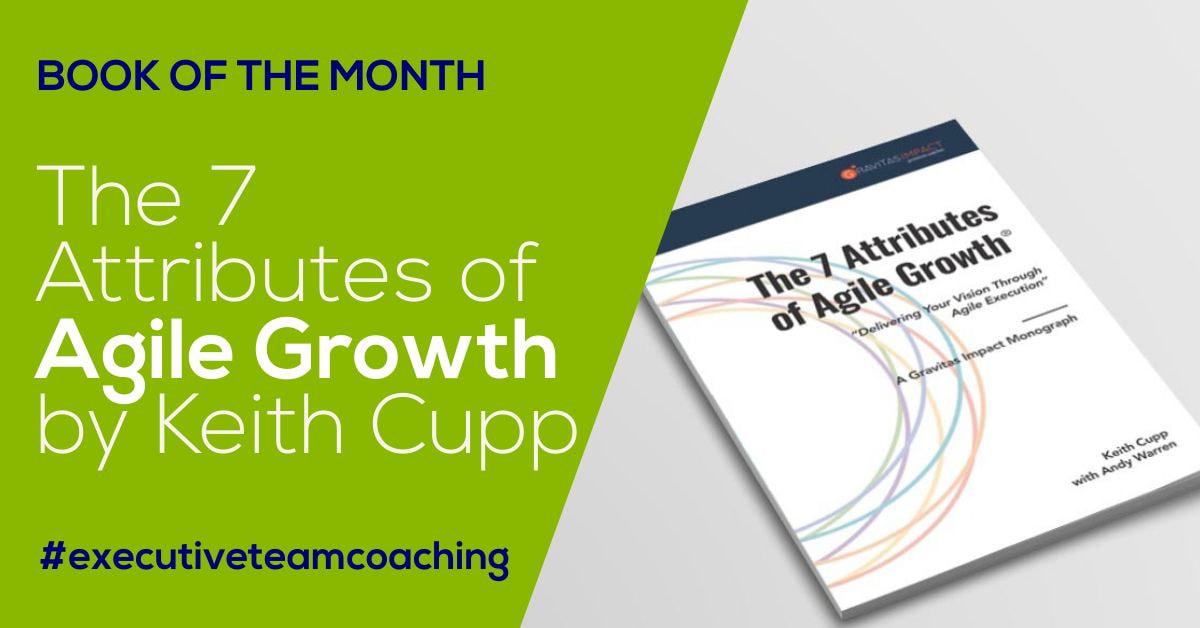 I’ve found that a growing number of CEOs and executive teams are becoming familiar with leadership operating systems for midsize companies; systems like The Rockefeller Habits, Scaling Up or the Entrepreneurial Operating System (EOS), that are summarized in books by the same names.
These systems have been built on each others’ shoulders: the Rockefeller Habits compiling best practices from a variety of thought leaders, EOS expanding on the habits and making them more accessible to small businesses, and Scaling Up adding more best practices to strengthen strategy, profitability and cash flow. When CEOs and their teams successfully implement these methods, then growth, and even profitable growth becomes easier, especially if they're working with a leadership team coach. However, as companies grow, the journey becomes more complex and some gaps can become apparent in these systems. I’ve also found that some companies struggle to implement these methods because certain elements aren’t covered in much depth; things like accountability, how to set metrics, targets and rocks, and how to get executive team alignment. While I use the Scaling Up method and the Rockefeller Habits with the companies I work with, as well as some of the tools that are unique to EOS, I also rely on a system that builds on their shoulders to fill the gaps and address some of the more subtle challenges of growth: The 7 Attributes of Agile Growth. The book, again by the same name, was written by Keith Cupp, CEO of Gravitas Impact Premium Coaches, the global community of executive team coaches I am a part of. The 7 Attributes of Agile Growth is a monograph, a relatively new format of book, being made popular by certain thought leaders, like Jim Collins with his Flywheel monograph. Monographs are relatively short, at 40 to 80 pages, designed to cover a narrow topic or provide a high level overview, and be read in one sitting, like on a short-haul flight. The book outlines the attributes of companies that are successful at not only growing, but also overcoming the new challenges that come with growth and adapting to a constantly changing environment in order to keep growing sustainably and profitably over time. These 7 Attributes include Leadership, Talent, Strategy, Execution, Profit, Customer and Systems. The leadership attribute is where the executive leadership team has done the work to become authentic, healthy, and aligned. Talent is about leaders and managers pursuing a culture of trust, results, and accountability with their people. The strategy attribute is where the executive team has defined and evolved a unique and valuable position in the market, and it can be easily recalled and stated by all employees in one phrase. Execution includes having annual, quarterly, and personal targets and priorities that are visible, measured, and activated successfully with a 13-week sprint. The profit attribute is where cash flow has been optimized, and the executive team understands the forces and levers in their control to increase profit and cash. The customer attribute is where the core customer has been defined, a compelling promise has been crafted, and the customer lifecycle has been systematized. Systems is where the organization has defined methods to optimize core processes, change management, decision-making, and technology use. The 7 Attributes of Agile Growth is an introductory monograph to the overall operating system. Separate monographs are being developed for each attribute. So far, four monographs have been released, going into some depth on: accountability, profit and cash flow optimization, A player talent, and competitive strategy. Monograph: 56 pages. How can you grow an agile company? To find out how to implement a leadership operating system to grow more easily, quickly and profitability, AND enjoy the ride, try our complimentary Agile Growth Checklist. This self-service questionnaire takes 5 to 10 minutes to complete. You'll receive the checklist with your responses immediately. Within 24 hours, you'll receive a compiled report highlighting areas to improve. Find out how your company is doing in each of the 7 areas needed to produce more rapid, profitable and sustainable growth. This report is complementary and involves no obligation.  You don't have to be a natural speaker to tell good stories. With this simple 7-step guide to storytelling, you can formulate your next pitch, presentation, lecture or speech as an exciting story - and make your customers the main character.
Customers and investors become convinced with good stories Everyone knows them: gifted storytellers. You come into a group of people, start talking, and in no time a bunch of listeners are hanging on their every word. Well, who do you think of from your circle of friends? What seems innate to some people pushes many entrepreneurs to the edge of their comfort zone even after years: investor pitches, customer presentations, speeches in front of the entire team. And what sounded so clear and convincing in your head simply doesn't come across correctly in front of an audience. The good news: You don't have to be a natural speaker to tell good stories and master the art of storytelling. Today I'll show you a simple 7-step guide with which you can quickly wrap your product presentation, your investor pitch or your next all-hands speech into an exciting story. Your listeners will be hanging on your every word – bet!? The framework I would like to introduce to you is called StoryBrand and was developed by US bestselling author Donald Miller. With this simple 7-step guide, you can package any product or company message into a story that is guaranteed to stay in the person's mind. From message to story in 7 steps What do the films Star Wars, The Hunger Games and Dirty Dancing have in common? Nothing? But! They all work according to the same structure: The main character (1) has a big goal that she really wants to achieve. She comes across a seemingly insoluble problem (2) . When her problem seems greatest, she meets a wise mentor (3) . He gives her a plan (4) and then gives her a push to put this plan into action (5) . In the end, the main character manages to prevent the impending defeat (6) and to be successful (7) . What Donald Miller is doing with his StoryBrand framework is not new. He uses the elements of the classic hero story and transfers them into the business context. Because why shouldn't a narrative structure that captivates millions of people in books and films also work in business communication?! So use this guide to structure your next talk, pitch or presentation as a story and make your customers the main character. Storytelling Step 1: The hero and his goal You, your company or your product are not the heroes of the story: your customers are. So before crafting your story, ask yourself:
This way you think about your customer's needs and avoid writing pages and pages just about yourself. Storytelling Step 2: The Problem Good stories thrive on conflict. What problems does your customer have? What keeps him awake at night? Where does he urgently need support? Such problems exist on three levels:
Storytelling Step 3: The Mentor Now you finally appear. As a wise mentor, you show your client that you understand them and their dilemma and can help them achieve their goal. To do this you need two things:
So ask yourself:
Storytelling Step 4: The Plan You have shown your customer that you understand him and his problem and have demonstrated your authority. Now describe exactly what happens next and give him a clear, simple plan:
No matter how many steps your plan actually has, boil it down to three steps. What you want your customer to remember is: Oh, how wonderfully easy it is to work with you. Storytelling step 5: The call to action Your customer now knows the next steps and knows what happens next. Now it's his turn. Tell your customer clearly what he should do next. What do you want to achieve with your presentation, lecture, conversation? This is the call to action that your story is coming to a head! Storytelling Step 6: Imminent failure What to do if your customer doesn't want to? Movement means expenditure of energy. That's why people only move if they can either get something positive in return (the goal) or avoid something negative (defeat). Gently remind your client what's at stake if they don't work with you. (problems as before) Such failures are common in the B2B sector:
Storytelling Step 7: Success At the end of your story, paint a clear picture of the bright future where your customer has achieved their goal. Describe clearly:
Conclusion No other communication approach focuses on its audience more consistently than StoryBrand's 7-step plan. Make your listeners the main characters in your story. As a mentor, help them achieve their goal and successfully eliminate problems along the way. Give them a plan on how to get there and get them moving in a targeted manner. You do this by carefully reminding them of what is at stake if they do not work with you and by painting a clear picture of the bright future in which your listeners have successfully achieved their goal. Follow this simple 7-step plan and structure your next pitch, lecture or conversation as a hero story. Do you notice how much more attentive your listeners are to you? Take advantage of this attention and bring your message home. https://justgrow.eu/blog/ If you're interested in reading more of Olaf articles please visit the website link above. (Please note that Olaf's site is in German but Google translate does an excellent job of instantly translating it to English.) How can you elevate your people to the next level? To find out what you can improve in your leadership team to grow more easily, quickly and profitability, try our complimentary Agile Growth Checklist*. This self-service questionnaire takes 5 to 10 minutes to complete. You'll receive the checklist with your responses immediately. Within 24 hours, you'll receive a compiled report highlighting areas to improve. This report is complementary and involves no obligation. Complete section 1 and 4 to check your leadership team* and accountability processes*. Or complete all 7 sections to find out how your company is doing in each of the 7 areas needed to produce more rapid, profitable and sustainable growth. |
Archives
December 2029
Categories
All
|
 RSS Feed